


Production costs include labor, raw materials, consumable manufacturing supplies, and general overhead. Taxes, royalty payments, and licensing fees are also considered production costs. Direct costs – those that can be traced directly to a particular object of costing such as a particular product, department, or branch. Some operating expenses can also be classified as direct costs, such as advertising cost for a particular product. By calculating manufacturing costs, companies can clearly understand the true cost of making a product. Based on this information, the company’s management can add a markup to determine competitive selling prices for their products.
Types of Production Costs

To sum up, finished goods that are not yet sold are considered assets. Manufacturing cost calculation gives an accurate view of the costs allowing companies to eliminate irrelevant costs and optimize resource utilization to boost profitability. The consulting firm was also able to re-negotiate the manufacturing company’s contracts with poor-performing suppliers. According to the book Manufacturing Cost Estimating, the benefits of calculating the costs of manufacturing range from guiding investment decisions to cost control. For instance, let’s say the hourly rate a manufacturing company pays to its employees is $30. The company purchases $1,000 worth of new materials to make product X.
Operating Profit vs. Gross Profit vs. Net Profit
- As a result, the steel manufacturing company was able to achieve a 10% reduction in manufacturing costs and save €1 million (approximately $1.7 million) annually.
- Since they are not allocated to goods produced, these costs never appear in the cost of inventory on a firm’s balance sheet.
- Direct labor – cost of labor expended directly upon the materials to transform them into finished goods.
- The balance sheet reports the assets, liabilities, and owner’s (stockholders’) equity at a specific point in time, such as December 31.
- We use the term nonmanufacturing overhead costs or nonmanufacturing costs to mean the Selling, General & Administrative (SG&A) expenses and Interest Expense.
- Using the bicycle manufacturing company example, non-manufacturing costs would include the salaries of the sales team, advertising expenses for promoting the bicycles, and the rent for the corporate office.
Examples of non-manufacturing expenses are sales commission, advertising expenses, rent of office building, and depreciation on the equipment used in office etc. Manufacturing overhead includes the indirect materials and indirect labor mentioned previously. Other manufacturing overhead items are factory building rent, maintenance and depreciation for production equipment, factory QuickBooks Accountant utilities, and quality control testing. In the end, management should know whether each product’s selling price is adequate to cover the product’s manufacturing costs, nonmanufacturing costs, and required profit.

Understanding Manufacturing Costs
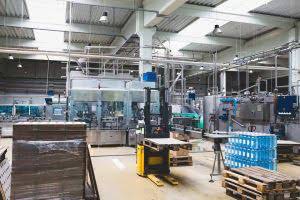
For instance, Ford Motor Company has reduced the price of F-150 Lightning, its electric car, by $10,000. The company has been able to do so by consistently working on improving the efficiency of production and lowering manufacturing costs. For that purpose, the company used sensors to collect and analyze the cost of materials in real time to see how to optimize the costs. The company engaged a consulting firm to help them find out what factors were driving up manufacturing costs. By looking at the historic data on employee timesheets and purchasing costs, the firm was able to understand the areas that were increasing the total manufacturing costs.

The income statement is also referred to as the profit and loss statement, P&L, statement of income, and the statement of operations. The income statement reports the revenues, gains, expenses, losses, net income and other totals for the period of time shown in the heading of the statement. If a company’s stock is publicly traded, earnings per share must appear on the face of the income statement. Indirect manufacturing costs include all other expenses incurred in manufacturing a product except direct expenses. Nonmanufacturing overhead costs are the company’s selling, general and administrative (SG&A) expenses plus the company’s interest expense. A current asset whose ending balance should report the cost of a merchandiser’s products awaiting to be sold.
A balance sheet is one of the financial statements that gives a view of the company’s financial position, while assets are the resources a company owns. These assets have value and the company can sell them to earn revenue. Another commonly used term for manufacturing costs is product costs, which also refer to the costs of manufacturing a product.
Nonmanufacturing overhead costs definition
For instance, managers of consumer goods companies such as Procter & Gamble and Anheuser-Busch prefer to allocate the high expense of advertising to a certain product. The systematic allocation of the cost of an asset from the balance sheet to Depreciation Expense on the income statement over the useful life of the asset. (The depreciation journal entry includes a debit to Depreciation Expense and a credit to Accumulated Depreciation, a contra asset nonmanufacturing costs include account). The purpose is to allocate the cost to expense in order to comply with the matching principle. In other words, the amount allocated to expense is not indicative of the economic value being consumed.
- While manufacturing or production costs are the core costs for a manufacturing entity, the other costs are also just as important as they too affect overall profitability.
- Though convenient for subscription businesses, recurring billing comes at a cost.
- Direct labor includes the production workers who assemble the boats and test them before they are shipped out.
- (Product costs only include direct material, direct labor, and manufacturing overhead.) Nonmanufacturing costs are reported on a company’s income statement as expenses in the accounting period in which they are incurred.
- Next, calculate the value of the existing inventory if the manufacturing company already has a stock of materials from a previous period.
Where does the time go?
- On the other hand, a product with a low gross profit may actually be very profitable, if it uses only a minimal amount of administrative and selling expense.
- With a breakup of all the costs of manufacturing, management can decide whether it is more profitable to purchase certain parts or materials from a vendor or manufacture them in-house.
- Manufacturers can compare the costs of making a product using different manufacturing processes.
- Cost of goods sold is usually the largest expense on the income statement of a company selling products or goods.
- Small, inexpensive items like glue, nails, and masking tape are typically not included in direct materials because the cost of tracing these items to the product outweighs the benefit of having accurate cost data.
- Under the accrual basis of accounting, the matching is NOT based on the date that the expenses are paid.
Similarly, the amount not yet allocated is not an indication of its current market value. More specifically, production costs are the direct and indirect expenses attributable to a company making a product or furnishing a service. For instance, if the manufacturing costs are too high, these costs can create a dent in the company’s profit. In this case, the management can decide to stop the production of some goods and invest in developing unearned revenue new ones that have a lower cost of production. Be sure to allocate overhead costs to the respective cost centers (specific departments, processes, or machines in the manufacturing facility that contribute to the manufacturing costs). Mastering the distinction between manufacturing and non-manufacturing costs is vital for effective managerial accounting.